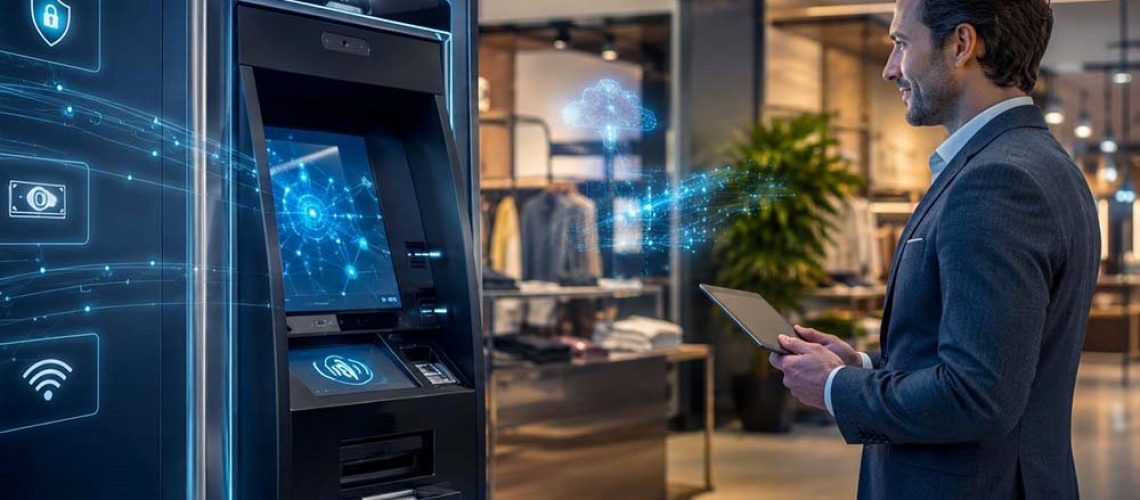

An automated teller machine (ATM) is a self-service banking device that allows users to withdraw cash, check balances, and perform basic financial transactions without a human teller. Over time, ATM systems have evolved far beyond simple cash dispensers. In 2026, modern ATM technology is integrated with digital banking networks, advanced security systems, and even business revenue-sharing models that make them valuable assets for retail locations.
Understanding automated teller machine technology 2026 helps explain how these systems now support both consumers and businesses more efficiently than ever.
How Does an Automated Teller Machine Process a Transaction?
ATM transactions follow a secure multi-step process involving the user’s card, the ATM network, and the issuing bank.
Step-by-step transaction flow:
1. Card insertion or tap authentication
- User inserts debit/credit card or uses contactless tap (NFC)
2. PIN verification
- PIN is encrypted and sent securely to the issuing bank
3. Network authorization
- ATM connects to payment networks (Interac in Canada or global networks like Visa/Mastercard)
4. Account validation
- Bank checks balance, fraud signals, and withdrawal limits
5. Transaction approval
- If approved, funds are reserved instantly
6. Cash dispensing
- ATM physically dispenses requested cash
7. Receipt and record update
- The transaction is logged in both the ATM and the bank systems
This entire process typically happens in seconds, supported by highly encrypted communication channels.
What Is the Difference Between an ATM and a Cash Machine?
In most contexts, there is no functional difference between an ATM and a cash machine—they are two terms for the same device.
However, usage differences exist:
ATM (Automated Teller Machine):
-
- Formal banking term
- Used in financial and technical contexts
- Includes advanced services like deposits and transfers
Cash machine:
-
- Informal/common language term
- Often used in everyday speech
- Typically emphasizes the cash withdrawal function
In Canada and most banking systems, “ATM” is the standard professional term, while “cash machine” is casual language.
What New Features Do Modern ATMs Have in 2026?
ATM systems in 2026 are significantly more advanced than traditional cash dispensers.
Key modern ATM features:
1. Contactless Transactions
- Cardless withdrawals using mobile wallets
- NFC tap-to-withdraw functionality
- QR code-based authentication
2. Biometric Security
- Fingerprint scanning (select machines)
- Facial recognition in high-security deployments
- Voice-assisted verification in experimental systems
3. Multi-Function Banking
- Cash deposits and cheque scanning
- Bill payments and transfers
- Prepaid card loading
- Account management features
4. Smart Security Systems
- AI fraud detection in real time
- Encrypted transaction monitoring
- Anti-skimming hardware upgrades
- Tamper detection alerts
5. Business-Integrated Features
- Dynamic surcharge pricing (location-based)
- Remote monitoring dashboards for operators
- Cash-level forecasting systems
- Real-time uptime analytics
These upgrades make ATMs more like financial kiosks than simple cash dispensers.
How Do Contactless ATMs Work in Canada?
Contactless ATM systems are now widely used in Canada through Interac-enabled networks and mobile wallet integration.
How it works:
- User opens mobile banking app or wallet (Apple Pay, Google Pay, etc.)
- Selects “withdraw cash” or ATM option
- A secure token or QR code is generated
- At the ATM, the user taps their phone or scans the QR code
- ATM verifies identity through encrypted authentication
- Cash is dispensed without inserting a physical card
Benefits of contactless ATMs:
- Reduced card skimming risk
- Faster transactions
- Improved hygiene and convenience
- Lower physical card dependency
In Canada, this system is tightly integrated with Interac security standards, ensuring encrypted and regulated transactions.
How ATM Technology Has Evolved for Businesses
Modern ATMs are no longer just banking tools—they are also revenue-generating business assets.
Key business-focused improvements:
- Revenue-sharing ATM placement models in retail locations
- Remote monitoring and cash optimization systems
- Reduced downtime through predictive maintenance
- Data analytics on transaction patterns
- Enhanced customer foot traffic attraction for stores
For many retail businesses, ATMs now function as “Passive income machines with built-in customer convenience.”
Security Evolution in ATM Systems
Security has become a central focus in modern ATM design.
Key improvements include:
- End-to-end encryption
- EMV chip-only card systems
- Anti-skimming devices
- AI-based fraud detection
- Real-time network monitoring
These systems significantly reduce fraud compared to earlier ATM generations.
Conclusion
Automated teller machines in 2026 have evolved far beyond simple cash dispensers. They now function as secure, multi-service financial kiosks that integrate contactless technology, biometric security, and business intelligence features. In Canada and globally, ATMs continue to adapt to digital banking trends while remaining a critical bridge between physical cash and modern financial systems.
Understanding automated teller machine technology 2026 shows how deeply embedded these systems remain in both consumer banking and retail business ecosystems.
FAQ’s
Q1. How does an automated teller machine process a transaction?
A: An ATM verifies the card and PIN, communicates with the bank network, checks account funds, approves the request, and dispenses cash while recording the transaction securely.
Q2. What is the difference between an ATM and a cash machine?
A: There is no technical difference. “ATM” is the formal term, while “cash machine” is an informal term used in everyday conversation.
Q3. What new features do modern ATMs have in 2026?
A: Modern ATMs include contactless withdrawals, biometric authentication, AI fraud detection, deposits, bill payments, and real-time monitoring systems.
Q4. How do contactless ATMs work in Canada?
A: To work in Canada, contactless ATMs use mobile wallets or QR codes to authenticate users securely, allowing cash withdrawals without inserting a physical card, integrated through Interac and banking networks.