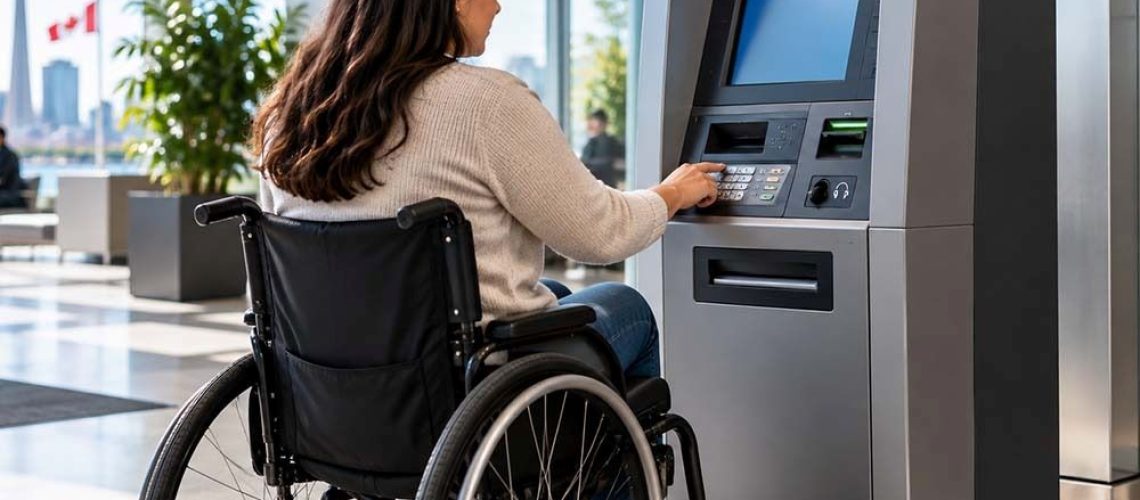

Understanding ATM accessibility requirements Canada 2026 can be important because the details influence the decision you make. This practical guide explains what matters, what to check first, and where common misunderstandings arise. Whether you are making an initial comparison or revisiting an existing arrangement, ATM accessibility requirements Canada 2026 deserves attention to facts, costs, limitations, and realistic expectations. The goal is to make the next step understandable without promising outcomes that cannot be guaranteed.
Accessible ATM Planning
Start with the physical approach: clear paths, reachable controls, and enough usable space for mobility devices. In practical terms, ATM accessibility requirements Canada 2026 should be considered alongside the reader’s individual priorities and the conditions that apply in a particular location or agreement. Height and reach measurements must follow the rules governing that installation, rather than an assumed universal Canadian measurement. Reviewing accessible ATM Canada regulations involves checking reliable sources, practical requirements, and the conditions relevant to your situation. Reviewing ATM ADA equivalent Canada compliance involves checking reliable sources, practical requirements, and the conditions relevant to your situation. Reviewing ATM machine compliance for disabled users Canada involves checking reliable sources, practical requirements, and the conditions relevant to your situation.
Understanding the Practical Details
Check screen readability, tactile identification, and private headphone access where the applicable standard or network rules require them. In practical terms, accessible ATM Canada regulations should be considered alongside the reader’s individual priorities and the conditions that apply in a particular location or agreement. Test the transaction journey with people who use different mobility, hearing, and vision supports. Reviewing ATM ADA equivalent Canada compliance involves checking reliable sources, practical requirements, and the conditions relevant to your situation. Reviewing ATM machine compliance for disabled users Canada involves checking reliable sources, practical requirements, and the conditions relevant to your situation.
Risks and Common Mistakes
Height and reach measurements must follow the rules governing that installation, rather than an assumed universal Canadian measurement. In practical terms, ATM ADA equivalent Canada compliance should be considered alongside the reader’s individual priorities and the conditions that apply in a particular location or agreement. Document the equipment model, configuration, maintenance arrangements, and any remedial work.
Questions Worth Asking
Test the transaction journey with people who use different mobility, hearing, and vision supports. In practical terms, ATM machine compliance for disabled users Canada should be considered alongside the reader’s individual priorities and the conditions that apply in a particular location or agreement. Accessibility obligations differ by jurisdiction, business type, installation date, and the specific financial network involved.
A Useful Step by Step Approach
Document the equipment model, configuration, maintenance arrangements, and any remedial work. In practical terms, ATM accessibility requirements Canada 2026 should be considered alongside the reader’s individual priorities and the conditions that apply in a particular location or agreement. Start with the physical approach: clear paths, reachable controls, and enough usable space for mobility devices.
Making a Confident Decision
The best outcome is usually the one that fits the reader’s actual circumstances and can be sustained over time. Accessibility obligations differ by jurisdiction, business type, installation date, and the specific financial network involved. In practical terms, accessible ATM Canada regulations should be considered alongside the reader’s individual priorities and the conditions that apply in a particular location or agreement. Check screen readability, tactile identification, and private headphone access where the applicable standard or network rules require them.
Also review details.
Frequently Asked Questions
Q1: What accessibility features must Canadian ATM machines have?
A: Accessible approach routes, operable controls, readable instructions, and alternative sensory access should be reviewed against applicable standards. The answer depends on the rules, features, and circumstances described above. Begin with the relevant official guidance or provider documentation, then confirm how it applies to your specific situation.
Q2: Are there height requirements for ATM machines in Canada?
A: Specific reach and mounting requirements depend on the standard, device type, and installation context; confirm the applicable measurements before installation. Before acting, verify the latest conditions and ask for any limitations in writing. A qualified professional can help when the consequences involve legal obligations, health, substantial spending, or financial risk.
Q3: What audio and visual features are required on ATMs in Canada?
A: Accessible audio guidance, tactile controls, sufficient contrast, and clear display information may be relevant; network specifications matter. Compare the available options using the same criteria. Ask what is included, what is excluded, which documents are needed, and whether ongoing responsibilities apply after the initial decision.
Q4: Who enforces ATM accessibility standards for Canadian operators?
A: Depending on the operator, federal or provincial accessibility bodies, financial regulators, and network rules may apply. There is rarely a universal solution. The appropriate approach depends on your objectives, resources, risk tolerance, and the current requirements of the organization or authority involved.